
 We’re living in unprecedented, challenging times. If you’re feeling stressed and scared, you’re not alone. However, there is a way to navigate through all of this uncertainty: gratitude. Studies have shown that keeping in mind the things you’re grateful for on a regular basis not only helps you mentally, but also physically, which is something we all need these days.
Gratitude Improves Your Immune System
According to Lisa Aspinwall, PhD, a psychology professor at the University of Utah, there’s data to back this up. In one study, researchers compared the immune systems of healthy, first-year law students who were under stress and characterized themselves as optimistic to their more pessimistic classmates. Result: The former maintained a higher number of blood cells, which protect the immune system. Specifically, white blood cells are key players in your immune system and move through blood and tissue looking for foreign invaders (microbes) such as bacteria, viruses, parasites and fungi. When they find them, they launch an immediate attack. Tip: The moment you notice that you’re appreciative of something – the sun is shining, the sky is blue, you have clean water to drink – stop and savor. Bask in the experience.
Gratitude Affects Your Brain
When you’re feeling appreciative, it wires and fires new neural connections to the bliss center and enhances dopamine and serotonin, the neurotransmitters responsible for happiness. Gratitude also reduces fear and anxiety by regulating the stress hormones; and it fosters cognitive restructuring by evoking positive thinking. Tip: When you’re eating, give thanks for the bounty before you. Make mealtimes mindful.
Gratitude Reduces Pain
In the research report, Count Blessings Versus Burdens (2003), patients who kept a gratitude journal reported reduced pain symptoms and were more inclined to work out and cooperate with treatment procedure. A deeper dive revealed that by regulating the level of dopamine, gratitude fills us with more vitality, which reduced the subjective feelings of pain. Tip: Try keeping a journal. If you think you have nothing to be grateful for, think about all the little things you have. You might find that you’re taking for granted certain abilities or privileges you have that others don’t.
Gratitude Affects Sleep
Studies have shown that receiving and displaying simple acts of kindness activates the hypothalamus, and thereby regulates all bodily mechanisms controlled by the hypothalamus, one of which is sleep. The hypothalamic regulation by gratitude helps us get deeper and healthier sleep, naturally. Tip: Hold the door for a stranger. Let someone have that parking space you both came upon. Share that compliment that’s on the tip of your tongue. To give is to receive. You might just rest easier.
Gratitude Gets Rid of Toxic Emotions
The limbic system is the part of the brain that’s responsible for all emotional experiences. It consists of the thalamus, hypothalamus, amygdala, hippocampus and cingulate gyrus. Research has shown that the hippocampus and amygdala, the two main sites regulating emotions, memory, and bodily functioning, get activated with feelings of gratitude. Specifically, what we call emotions or feelings are neural activations in the neocortical regions of the brain (Moll et al. 2005). Further, a study conducted on people who were looking for mental health guidance revealed that those who wrote letters of gratitude, in addition to having regular counseling, felt better and recovered sooner. In the other group, people who journaled about their negative feelings felt anxious and depressed. Tip: In addition to journaling, maybe there’s a letter you need to write to someone expressing how you feel, releasing a past hurt. The simple act of writing can be powerful. You don’t even have to send it to feel better.
Right now, when we’re faced with so many unknowns, staying present and giving thanks can do a world of good. Give it a try and see.
Sources
https://www.adventhealth.com/blog/why-gratitude-important-during-coronavirus-pandemic
https://www.webmd.com/women/features/gratitute-health-boost#1
https://www.betterhealth.vic.gov.au/health/conditionsandtreatments/immune-system?viewAsPdf=true
https://positivepsychology.com/neuroscience-of-gratitude/
https://www.urmc.rochester.edu/encyclopedia/content.aspx?ContentID=4552&ContentTypeID=1#:~:text=It’s%20simply%20writing%20down%20your,and%20improve%20your%20mental%20health.
https://www.psychologytoday.com/us/blog/minding-the-body/201111/how-gratitude-helps-you-sleep-night
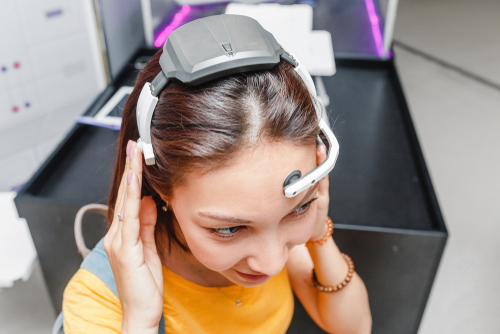 Imagine using your mind to control machines, or your employer reading how you feel in real time from a dashboard? This is the future of BCI technology.
 National Suicide Hotline Designation Act of 2020 (S 2661) – Introduced by Sen. Cory Gardner (R-CO) on Oct. 22, 2019, this bill requires the Federal Communications Commission to designate 988 as the universal telephone number for a national suicide prevention and mental health crisis hotline. It also directs the Department of Health and Human Services to provide access to competent, specialized services for high-risk populations such as LGBTQ youth; minorities; and people who live in rural areas. The Act was passed in the Senate in May, the House in September, and was signed into law on Oct. 17.
 The Senate Republicans’ slimmed-down stimulus bill recently failed to materialize after receiving less than the 60 votes needed to move forward. The “skinny” stimulus bill, with a price tag of only $650 billion, was intended to be a way to quickly inject stimulus into the economy and bypass both the multi-trillion-dollar Republican HEALS Act and the Democratic HEROES Act.
 With winter around the corner and the threat of seasonal viruses looming, a second wave of COVID-19 poses a real threat to our health and business operations, according to Johns Hopkins Medicine.
 Looking back to 2012, the Federal Open Market Committee (FOMC) – a collaboration of the 12 regional Fed banks and the Federal Reserve Governors in Washington – came together and published a Statement on Longer-Run Goals and Monetary Policy Strategy.
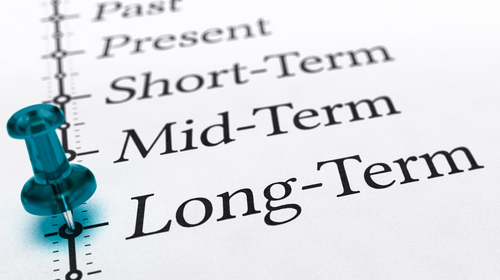 As bad as the economy is right now due to the COVID outbreak in the United States, many economists are predicting that the long-term outlook is much bleaker. Alas, Congress and the Federal Reserve’s efforts at stimulus and interest rate management have done much to keep the economy and stock market afloat. However, small businesses – the backbone of America’s employment growth – are closing every day. As consumer spending reduces further, the impact will likely affect Wall Street. Consequently, share prices may soon begin correcting to reflect the future more so than the present.
 Due to the uncertainty of COVID-19, many schools across America have transitioned to at-home learning. This alone presents a whole new set of challenges for parents, not the least of which is figuring out what to feed your kids for lunch – every single day of the week. While peanut butter and jelly is a reliable standby, here are some cheap, easy alternatives you can whip up in no time.
 PROSWIFT Act (S 881) – This Act was sponsored by Sen. Gary Peters (D-MI) on March 26, 2019. The legislation is designed to improve understanding and forecasting of weather events in space. The bill details provisions designed to improve the ability of the United States to both forecast and mitigate the effects of space weather. The bill designates the National Science and Technology Council’s Space Weather Operations, Research, and Mitigation Working Group as the authority to direct other agency initiatives. The bill establishes a pilot program to enable the National Oceanic and Atmospheric Administration (NOAA) to enter into contracts with the commercial sector to provide space weather data, in adherence to certain standards. The bill passed in the Senate in July and in the House in September, and is currently waiting to be enacted by the President.