
 Comprehensive Debt Collection Improvement Act (HR 2547) – This bill would expand financial protections and restrictions on debt collection activities for consumers, in particular for private student loans and medical debt. The legislation would require lenders to discharge private student loan debt if the borrower dies or becomes permanently disabled. It would prohibit consumer reporting agencies from adding any information related to certain situations, such as debt arising from a medically necessary procedure, and restrict certain debt collection practices.
The bill was introduced by Rep. Maxine Waters (D-CA) on April 15. It was passed by the House on May 13 and is currently under consideration in the Senate.
COVID-19 Hate Crimes Act (S 937) – This bill was introduced by Sen. Mazie Hirono (D-HI) on May 23. The legislation authorizes the designation of a Department of Justice (DOJ) employee to facilitate an expedited review of hate crime reports. The DOJ also must issue guidance for state, local and tribal law enforcement agencies to establish online hate crime reporting processes and issue guidance to raise awareness of hate crimes related to COVID-19. The bill also authorizes funding for states to create state-run hate crime reporting hotlines. This bill was passed by Congress on May 18 and is awaiting signature by the president.
Washington, D.C., Admission Act (HR 51) – This bill provides for the admission of the State of Washington, D.C., into the Union. The legislation was introduced by Rep. Eleanor Norton (D-DC) on Jan. 4 and passed in the House on April 22. It is currently under consideration in the Senate.
SAFE Banking Act of 2021 (HR 1996) – Introduced by Rep. Ed Perlmutter (D-CO) on March 18, this bill would eliminate penalties imposed on a depository institution for providing banking services to a legitimate cannabis-related business. The legislation passed in the House on April 19 and is in the Senate for consideration
DUMP Opioids Act (S 957) – This bill was introduced by Sen. John Kennedy (R-LA) on March 24 and passed in the Senate on April 22. It is currently under consideration in the House. The bill would require the Department of Veterans Affairs (VA) to designate places where any individual can dispose of controlled substance medications at VA medical facilities or law enforcement locations. The bill also directss the VA to advertise the designated disposal times and locations via a public information campaign.
NO BAN Act (HR 1333) – Introduced by Rep. Judy Chu (D-CA) on Feb. 25, this bill passed in the House on April 21 and goes to the Senate next for consideration. The purpose of the legislation is to impose limitations on the president’s authority to suspend or restrict aliens from entering the United States. Furthermore, the bill would prohibit religious discrimination to be used as a basis for immigration-related decisions.
 While excise or vice taxes have long been a part of the American tax landscape related to alcohol and cigarettes, the recent invention of vaping and legalization of marijuana and other substances is changing the landscape.
 Looking at a 2009 letter from the U.S. Department of Labor, Occupational Safety and Health Administration (OSHA), employers may be able to require their employees to take the COVID-19 vaccine, with a few exceptions (such as the likelihood of a life-threatening reaction to it). With the COVID-19 vaccine being rolled out, how can employers balance workplace safety, maintain productivity and stay within the law?
 The Obama and Trump administrations couldn’t have had a more different approach when it came to U.S. relations with China. As the Institute for China-America Studies (ICAS) explains, under the Obama administration, the United States favored a trade and investment approach when dealing with China, while the Trump administration had a national security focus. The ICAS believes the Biden administration will address trade and economic imbalances through a modified approach, including reducing tariffs on imported Chinese goods over time to decrease inflation for American consumers. Another example is maintaining pressure on China to cut government subsidies for competing industries, currency games, and exporting products to the United States at artificially low prices.
 About one million Americans file for personal bankruptcy each year, with one in 10 households having filed at some point. Given the loss of jobs, reduced income, and the coronavirus recession in 2020, those numbers could increase this year if the economic recovery is not both swift and omnipresent.
 Roth IRAs can be a powerful tax tool, but they are often misunderstood and misused. Investment income in Roth IRAs compound tax-free and most distributions are tax-free as well. Another benefit is that there are no required minimum distributions (RMDs) throughout the original owner’s life. Long-term Roth distributions are tax-free to the beneficiaries who inherit the IRA as long as they fully distribute the Roth within 10 years of inheriting.
 5G networks promise high speeds, lower latency, and more robust security compared to its predecessors – and this has created a lot of buzz. As a result, there is a lot of competition among operators to roll out the network while manufacturers are already producing 5G devices.
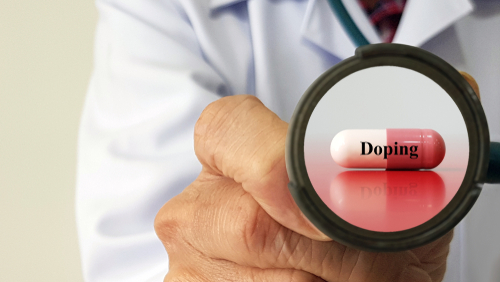 Rodchenkov Anti-Doping Act of 2019 (HR 835) – This bill was introduced by Rep. Sheila Jackson Lee (D-TX) on Jan. 29, 2019. The purpose of this legislation is to give U.S. officials the power to prosecute individual athletes who used performance-enhancing drugs at international sports competitions involving American athletes. The legislation has been criticized by the World Anti-Doping Agency (WADA) as undermining the global anti-doping movement based on international cooperation, and because no other nation has extra-territorial jurisdiction in this field. The bill passed in the House in October, the Senate in November, and was signed into law by the president on Dec. 4.
 The Social Security Administration recently announced 2021 increases to both benefits and the taxable wage base for FICA taxes.
 In order to survive – and even thrive – during these unprecedented times, small businesses have had to find new ways to make money. The UPS Store’s Small Biz Buzz survey found that 41 percent of small businesses in the United States took steps to modify their businesses in hopes of survival. Fifteen percent provided customers with curbside delivery options, 28 percent moved to online sales as their primary source of sales, and 65 percent made a concerted effort to grow their e-commerce capabilities.