
 Pallone-Thune Telephone Robocall Abuse Criminal Enforcement and Deterrence Act (S 151) – Approximately 58.5 billion robocalls were made in the United States last year, a 22 percent increase over 2018. That works out to an average of 178.3 robocalls per person, per year. Perhaps it’s no wonder then that this law was passed by an overwhelming bipartisan majority in Congress. The legislation requires that phone companies ensure all calls come from real numbers, do not charge extra to block robocalls, and authorize government regulators to punish scammers with fines of up to $10,000 per call. This legislation was sponsored by Sen. John Thune (R-SD) and Frank Pallone Jr (D-NJ); it was signed into law by the president on Dec. 30, 2019.
Building Blocks of STEM Act (S 737) – This bill modifies National Science Foundation (NSF) grant programs that support STEM education (science, technology, engineering and mathematics) to promote the role of teachers and caregivers in encouraging participation by female students in STEM activities. Specifically, the bill authorizes the development of gender-inclusive computer science enrichment programs in pre-kindergarten through elementary school. The legislation was sponsored by Sen. Jacky Rosen (D-NV). It was introduced on March 11, 2019, and signed into law by the president on Dec. 24.
Support for Suicide Prevention Coordinators Act (HR 2333) – This legislation requires the Government Accountability Office to report on the responsibilities, workload, training and vacancy rates of suicide prevention coordinators. The bill responds to reports that coordinators are overworked and unable to keep up with their many responsibilities, particularly in light of the recent increase in veteran suicides. The Act was introduced on April 18, 2019, by Rep. Anthony Brindisi (D-NY); it passed the House in May, the Senate in December and was signed into law on Dec. 20, 2019.
Further Consolidated Appropriations Act, 2020 (HR 1865) – This annual appropriations bill sets government spending limits for the current fiscal year (Oct. 1, 2019, through Sept. 30, 2020). Among a myriad of provisions, the bill extends funding for various health-related programs; deters pharmaceutical companies from blocking lower-cost generic alternatives from entering the marketplace; and repeals the Cadillac tax on expensive employer plans, the medical device excise tax, and the health insurance fee that was initially imposed by the Affordable Care Act. The final version of the bill was passed by the House and Senate in mid-December and signed by the president on Dec. 20, 2019.
National Defense Authorization Act for Fiscal Year 2020 (S 1790) – This $738 billion defense bill authorizes fiscal year 2020 appropriations and policies for the Department of Defense. Provisions include authorization for a sixth, stand-alone branch of the U.S. military service (Space Force); guaranteed 12 weeks of paid parental leave for federal workers; a 3.1 percent pay raise for active-duty personnel; allows for Liberian nationals living in the United States under Deferred Enforced Departure to apply for permanent residency; funding for improvements to military housing and health care; funding to purchase 60 F-35s for the Air Force; and a dictate that prohibits Turkey from participating in the F-35 program as long as it maintains a Russian-made missile system. Note that passage of this bill does not provide budget appropriations, which is authorized in subsequent legislation. This bill was passed in both the House and Senate on Dec. 17, 2019, and signed into law on Dec. 20, 2019.
FUTURE Act (HR 5363) – This bill permanently authorizes funding for historically Black colleges and universities and other minority-serving institutions, and increases appropriations for Pell Grants. The legislation was introduced by Rep. Alma Adams (D-NC) on Dec. 9, 2019, passed in both the House and Senate on Dec. 10, 2019, and signed into law on Dec. 19, 2019.
 Reauthorizing Security for Supreme Court Justices Act of 2019 (HR 4258) – This bill reauthorizes the Marshal of the Supreme Court and the Supreme Court Police to protect the Justices of the Supreme Court, their employees and official guests outside of the Supreme Court grounds. The legislation was sponsored by Rep. Greg Stanton (D-AZ). It was introduced on Sept. 9, 2019, and signed into law by the president on Nov. 27, 2019.
 National POW/MIA Flag Act (S 693) – This bill amended title 36 of the United States Code to require that the POW/MIA flag be displayed on all days that the flag of the United States is displayed on certain federal properties. Previously, the POW/MIA flag was displayed only on Armed Forces Day, Memorial Day, Flag Day, Independence Day, National POW/MIA Recognition Day and Veterans Day. The legislation was introduced by Sen. Elizbeth Warren (D-MA) on March 7. It was passed in the Senate on May 2, passed in the House on Oct. 22 and signed into law by the president on Nov. 7.
 Terrorist and Foreign Fighter Travel Exercise Act of 2019 (HR 1590) – This bill promotes the identification and determent of terrorist activity from reaching the homeland, and enhances the United States government’s ability to respond to terrorism, including emerging threats. Specifically, the legislation requires the Department of Homeland Security to develop and conduct exercises related to foreign terrorism, including the National Incident Management System, National Response Plan, and other related plans and strategies. The legislation was introduced on March 7 by Rep. Michael Guest (R-MS). The president signed the bill into law on Oct. 9.
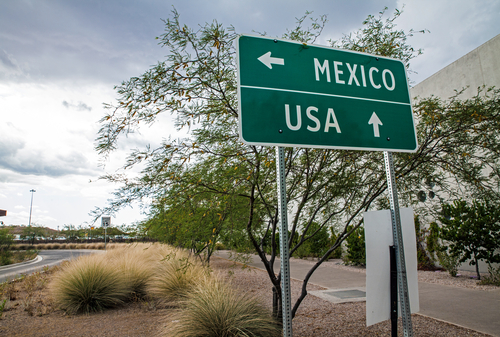 Emergency Supplemental Appropriations for Humanitarian Assistance and Security at the Southern Border Act, 2019 (HR 3401) – This legislation provides $4.5 billion in emergency supplemental appropriations to federal departments and agencies for humanitarian assistance and security to respond to migrants attempting to enter the United States at the southern border for the rest of the fiscal year. This funding is available for appropriations for U.S. Customs and Border Protection, U.S. Immigration and Customs Enforcement, the Federal Emergency Management Agency, and the Department of Health and Human Services for the Administration for Children and Families. The bill also includes requirements and restrictions for how the funds may be used. It was introduced on June 21 by Rep. Nita Lowey (D-NY) and was signed into law by the president on July 1.
 National Flood Insurance Program Extension Act of 2019 (S 1693) – This bill reauthorizes the National Flood Insurance Program, which was set to expire on May 31, through June 14. The bill was introduced by Sen. John Kennedy (R-LA) on May 23, passed the Senate and the House in one week and was signed into law by the president on May 31.
 Target Practice and Marksmanship Training Support Act (H.R. 1222 – The Pittman-Robertson Act, passed in 1937, imposes an excise tax on the sale of firearms, archery gear and ammunition. Those proceeds are used to fund hunter education programs, land acquisition and improvement of wildlife habitat. This new bill allocates a higher portion of these federal funds to cover the cost for construction and expansion of public target ranges. The act is designed to encourage states to develop additional shooting ranges for marksmanship training. It was introduced on Feb. 14 by Rep. Ron Kind (D-WI), passed in both the House and Senate and was signed into law by the president on May 10.